
When discuss classic anime studios that shaped the medium, giants like Madhouse, Sunrise, or Studio Ghibli often dominate the conversation. However, tucked away in animation history is Studio Artland—a quiet studio founded in 1978 by legendary director Noboru Ishiguro that left a distinct mark before officially closing its doors in 2017.
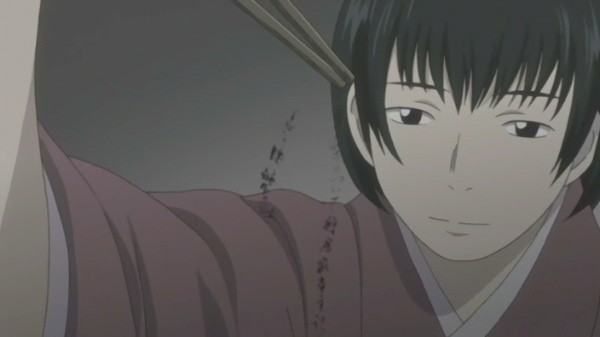
Artland was a studio of remarkable artistic contrast. They didn’t lock themselves into a single genre; instead, they mastered wild extremes. On one hand, they produced some of the most restorative, deeply atmospheric visual poetry in television history. On the other, they delivered massive, multi-volume sci-fi political epics and high-octane battle shonen.
Studio Artland’s 4 Greatest Anime Classics
If you are looking to excavate gold from a studio whose catalog prioritizes storytelling over fleeting trends, these four titles represent the absolute best of Studio Artland.
1. Mushishi (2005–2014)
- Genre: Supernatural / Iyashikei / Slice of Life
- The Vibe: Restorative, ethereal, and deeply philosophical.
The Breakdown
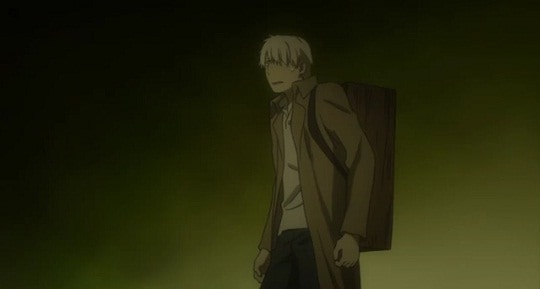
Arguably Artland’s crowning achievement, Mushishi is often cited as one of the greatest episodic anime ever produced. Directed by Hiroshi Nagahama, the series follows Ginko, a silver-haired wanderer who studies “Mushi”—primitive, supernatural lifeforms that exist alongside humanity, often causing strange natural phenomena.
Why It Works (And Where It Demands Patience)
Mushishi is the ultimate definition of an “iyashikei” (healing) anime. It completely shuns high-stakes battles or rapid-fire plot twists, relying instead on lush background art, a tranquil acoustic score, and quiet, human-driven folklore. Its episodic structure allows each story to feel like a self-contained fable.
Because of its intentional, slow-paced rhythm, it isn’t designed for binge-watching. If you enter expecting modern action, its quiet nature might feel too slow. But if you treat it as a meditative respite, Mushishi is a soul-soothing masterpiece that stays with you long after the credits roll.
2. Legend of the Galactic Heroes (1988–1997)
- Genre: Sci-Fi / Space Opera / Political Drama
- The Vibe: Intellectual, grand scale, and uncompromisingly dense.
The Breakdown
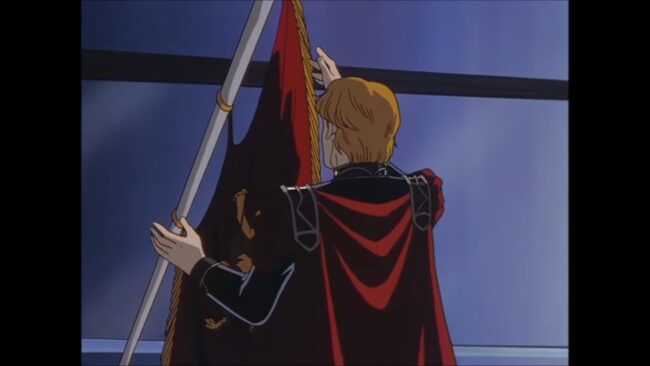
Co-produced by Artland, this 110-episode OVA epic is universally recognized as the gold standard of space operas. Set against an interstellar war between the autocratic Galactic Empire and the democratic Free Planets Alliance, the narrative focuses on two opposing military geniuses: Reinhard von Lohengramm and Yang Wen-li.
Why It Works (And Where It Demands Patience)
Unlike many space adventures that rely on laser fights and alien monsters, Legend of the Galactic Heroes functions like a massive, animated historical documentary. It dissects political philosophy, democratic failure, dictatorship, and the brutal reality of military logistics with unmatched maturity.
The animation carries the visual style of late-’80s production, and the sheer volume of dialogue and historical exposition can feel daunting to newcomers. Yet, its lack of narrative shortcuts or clear-cut “good vs. evil” dynamics creates one of the most intellectually rewarding journeys in animation history.
3. Katekyō Hitman Reborn! (2006–2010)
- Genre: Action / Supernatural / Mafia Shonen
- The Vibe: Stylish, high-energy combat with creative power systems.
The Breakdown
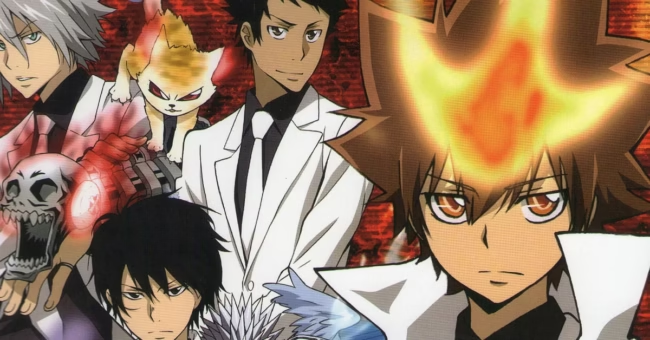
On the opposite end of the spectrum, Katekyō Hitman Reborn! was Artland’s primary mainstream hit during the late 2000s. It follows Tsunayoshi Sawada, an insecure high schooler who discovers he is the rightful heir to the powerful Vongola mafia family, supervised by an infant hitman named Reborn.
Why It Works (And Where It Demands Patience)
Reborn! is famously a tale of two halves. The initial 20+ episodes strictly follow an episodic, slapstick comedy format that can be a hurdle for viewers looking for plot progression. However, once the show shifts gears into its battle-shonen framework (starting with the Kokuyo and Varia arcs), it transforms completely.
Artland brought immense energy to the series’ iconic flame-based power systems and mafia warfare. For fans willing to push past the early comedic setup, it delivers some of the most memorable battle arcs of its era.
4. Megazone 23 (Part I & II – 1985–1986)
- Genre: Cyberpunk / Mecha / Mystery
- The Vibe: Gritty ’80s aesthetics, motorcycle action, and simulation themes.
The Breakdown
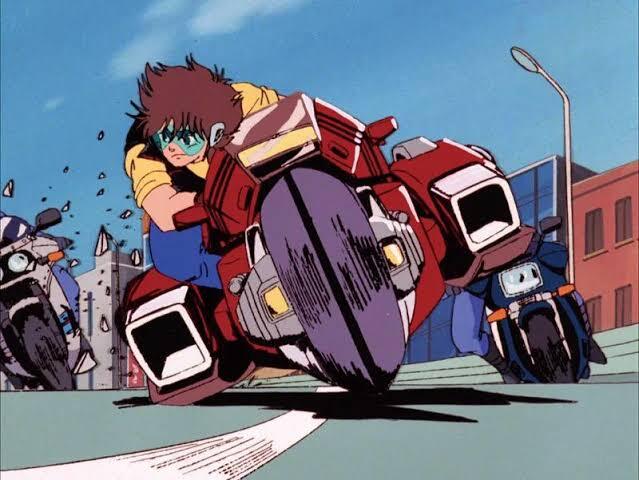
Co-produced alongside Studio Artmic, Megazone 23 was a landmark release during the original video animation (OVA) boom of the 1980s. The story follows Shogo Yahagi, a delinquent motorcyclist who stumbles upon a top-secret government prototype bike, leading him to a world-shattering truth about the artificial reality he inhabits.
Why It Works (And Where It Demands Patience)
With character design contributions from Haruhiko Mikimoto, Megazone 23 captures the raw, hand-drawn aesthetic of 1980s Japan. Its atmospheric cityscapes, mechanical detail, and early exploration of simulated realities paved the way for future cyberpunk icons like The Matrix.
While Part II suffers from a somewhat rushed narrative transition compared to the tight execution of Part I, its stylish aesthetic, rebellious energy, and incredible soundtrack make it a essential time capsule of retro anime history.
Studio Artland may no longer be active, but its legacy lives on through stories that refused to take the easy path. Whether you’re sinking into the quiet forests of Mushishi or exploring galactic governance in Legend of the Galactic Heroes, Artland proved that animation could be as deeply poetic as it is wildly ambitious.
Over to You: Have you explored any of Studio Artland’s classics? Which of these four unique series fits your personal watching style best? Let us know in the comments below!
Last Updated on July 31, 2026 by Yu Alexius
Leave a Reply
You must be logged in to post a comment.